Measuring Success: Key Metrics from Our Data Migration Journey


About the client
Which?, a wholly owned subsidiary of the Consumers’ Association (a registered charity), is a UK-based consumer organisation that tests products and services, conducts research, and advocates for consumer rights. Valuable findings are regularly published to their members, who can choose to subscribe to the Digital membership, and the well-known Which? magazine, as well as several other topic-focused magazines like Travel, Money, Tech & Gardening.
What our Client Says About Us


Client's challenge


Key challenges and expectations
The client was replacing their highly-customised legacy CRM platform that had been in use for 13 years, with a cloud-based solution on Salesforce, Zuora and Limio. The main benefits of this Digital Transformation Programme were to:
- improve the customer experience
- upgrade and enhance the lead to cash process
- improve customer acquisition and retention
- and ensure compliance throughout
Key challenges that we assisted the client overcoming:
- Data migration was attempted 2 times before
- Due to these unsuccessful previous programmes, the client was left with the original legacy system and a half-finished “to-be” architecture, both of which had to be run in tandem. This included: 2 legacy CRM’s, 2 legacy billing platforms, plus an identity platform and a marketing platform communicating with both CRM’s.
Additional Technical Challenges
- An additional challenge was presented by the Salesforce Case Feed which, while it has a useful feature for chronologically ordering data, had the ordering operated exclusively on the date when the data entered the system, and could not be altered to an importable field. This limited the use of an extremely well performant import option (bulk), but allowed us to be creative and build a custom multi-object ordering sequence which ensured data entered the target system in the same order as it was created on the legacy system. As the Created/Modified fields were preserved, the viewer of the Feed would not be able to notice the difference!
- Additional complexity arose because the systems were working in parallel, aka dual-running, so the customer could have subscriptions in both the legacy and the new systems. In developing our solution, we needed to take care not only of migrating the data from the legacy systems, but also considering data in the new platforms, especially when it came to marketing preferences and consents.
The Data Migration Journey
This was a data migration project with several deliveries, where Solvership performed:
1. An initial Data Discovery - to evaluate the current state, capture data migration requirements, and get an understanding of the new “to-be” architecture.
2. After that, we entered into a Detailed Analysis and Data Migration Delivery - this was performed in a staggered, agile manner, alongside system integrators and clients’ internal squads that were building the greenfield platforms.
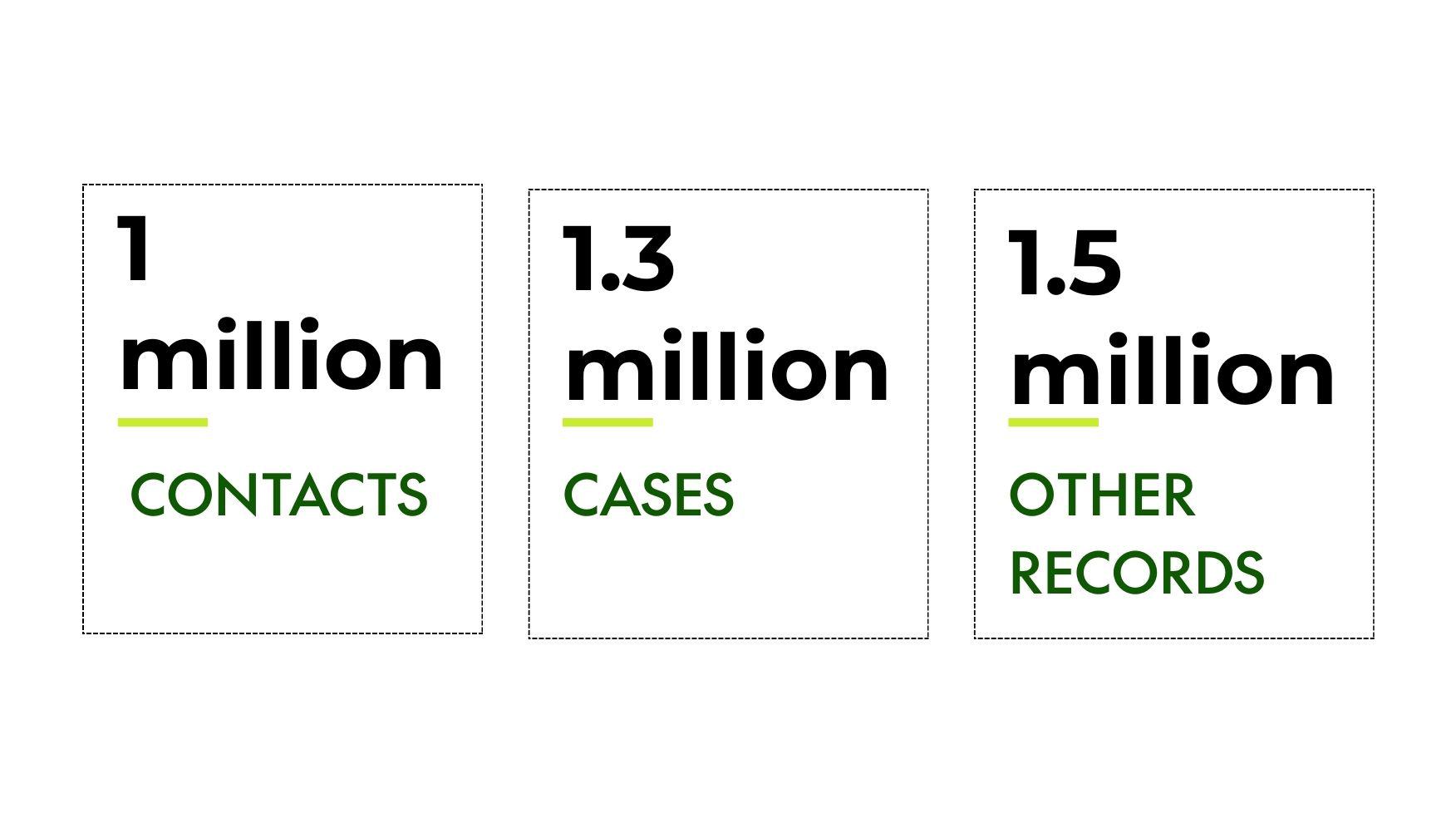
3. Case Management migration – this was the first piece that went live, and as part of it we migrated 1 million contacts, 1.3 million cases, and their related correspondence data (Tasks, Email Messages, Live Chat Transcripts, Content Documents, etc.)
4. Pilot migrations – several smaller loads using test subscriptions bought through standard channels. Testing covered: regular digital products, products with magazine fulfilment, different forms of payment, different bundle combinations, etc.
5. Rollout of 18 B2C subscription migrations – in order to mitigate risk, migrations were batched into several sizes: 100, 1.000, 10.000, and 50.000. The batch size was capped to 50.000 for several strategic reasons, and the calculation of eligible subscriptions was a complex mechanism built by Solvership, which allowed seamless bill runs with different forms of payment. The data migration followed the releases of functionality onto the target platform, and the rollout strategy was based on products, amongst other criteria.
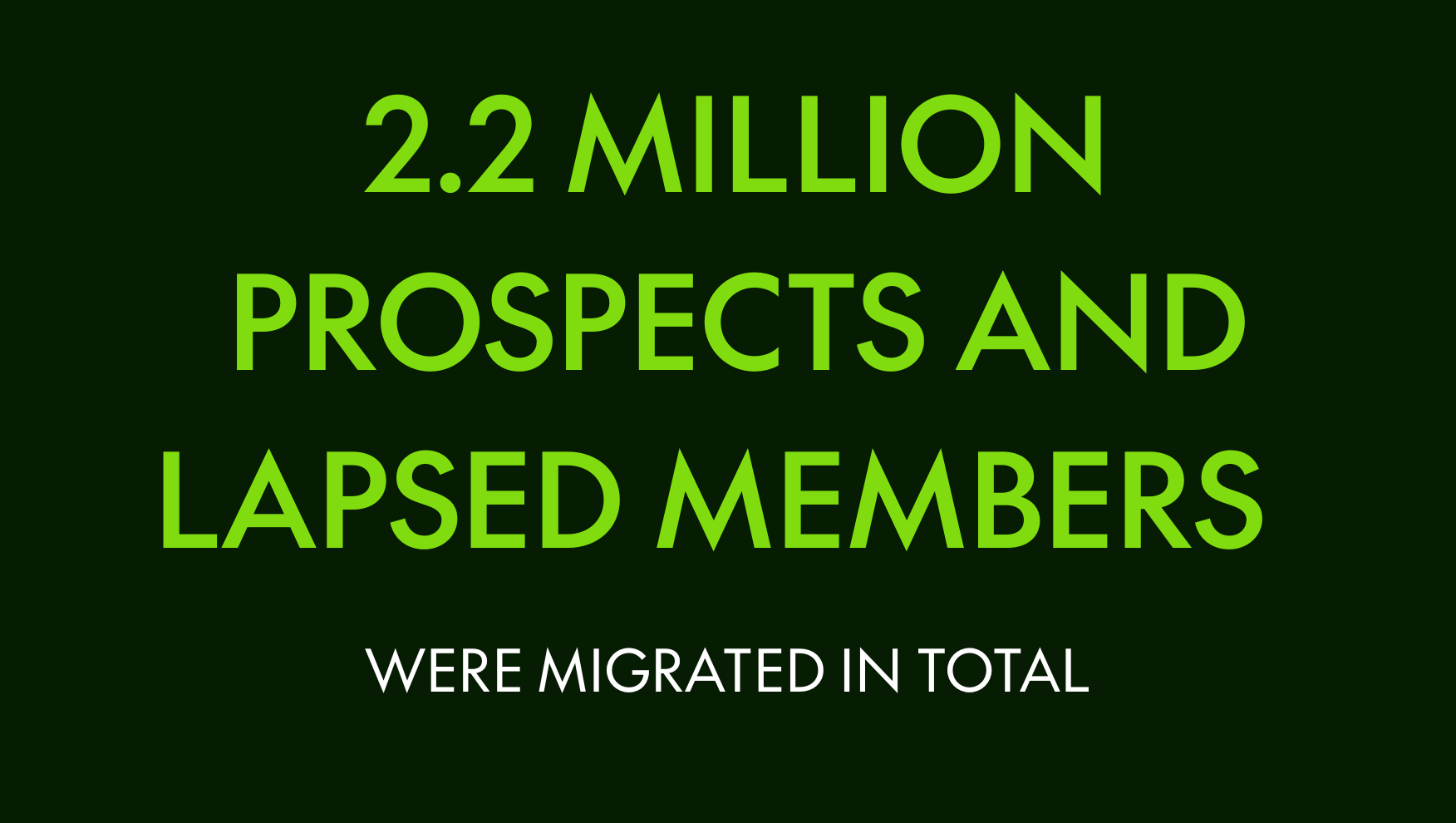
6. Migration of lapsed members and prospects – where 2.2 million records were migrated, with their marketing preferences and consents.
7. And finally, a rollout of 4 additional subscription migrations – which included a smaller group of different subscription types: Free subs, Gift subs, B2B subs, and Ordinary Members (non-executive members that have a say in governance of Which?).
How did we solve it?
The core solution is based on the data migration methodology developed internally by the Solvership team, which covers several modules of the end-to-end B2C sales process.
Specifically for Which?, Solvership built several custom migration processes:
- A solution for migrating Cases and their related data.
- A migration solution for regular B2C customers (non-corporate subscribers buying their own subscription).
- A solution for migrating consents and marketing preferences, which captured data from 4 different systems and supported dual running between the legacy and new platforms.
- An improved API loader for highly performant loads of data into Zuora.
- Automated testing scripts for validating both the prepared data and migrated data.
- And finally, assisted the client in the build of the card migration solution.
Throughout the project, Solvership had performed detailed data analyses, specifications of the source and target data mapping, together with the solution architecture and design of the ETL processes.
Because the rollout spanned over several months, the solution was evolving to incorporate platform improvements and changes. In a multi-platform architecture like in this case, where the migration has to be repeated many times, it is key to factor in writing steps down and automating as much as possible, to ensure consistency and accuracy. This is why we made a very detailed cutover plan, which evolved with the platform and was easy to follow, track progress and estimate duration.
The result
This migration successfully met all the project requirements. The specific challenge of this project was to be successful where the predecessors failed. The logic was complex, the systems and processes entangled, and after attempting it multiple times – the business users were experiencing analysis fatigue. The Solvership team positioned itself to help bridge the gap, take responsibility for the whole migration process, analyse thoroughly and bring options and conclusions forward for easier decision making.
By implementing the new platform, Which? benefitted by:
- providing a more flexible online journey for the B2C customers, e.g. by allowing online cancellations
- enabling online retention offers leading to a decrease of customer churn
- improving the Member Services (call centre) processes by utilising Salesforce Service Cloud case management features, e.g. live chat
- making a single source of truth for marketing preferences by managing it centrally in Salesforce, and connecting it with the subscription data
Systems & Technologies used
Systems
Source data was extracted from:
- a custom CRM
- Salesforce Service Cloud
- Salesforce Marketing Cloud
- and Zephr (identity platform)
then transformed and loaded to target objects on several platforms:
- Salesforce Service Cloud
- Zuora
- Limio
- Zephr
- Salesforce Marketing Cloud
Technologies
The platform used for the data migration solution is based on Microsoft technologies and utilises several databases on MS SQL Server, ETL packages developed in MS SSIS and an API Loader built in Python. The solution enables repeatable and fast processes of data ingestion, transformation, and push to target orgs.
Solvership’s solution used the following tools:
- Microsoft SQL Server (on Amazon Workspaces; AWS)
- Microsoft SQL Server Integration Services; SSIS (on AWS)
- Microsoft Visual Studio Code
- Python
Why Solvership?